
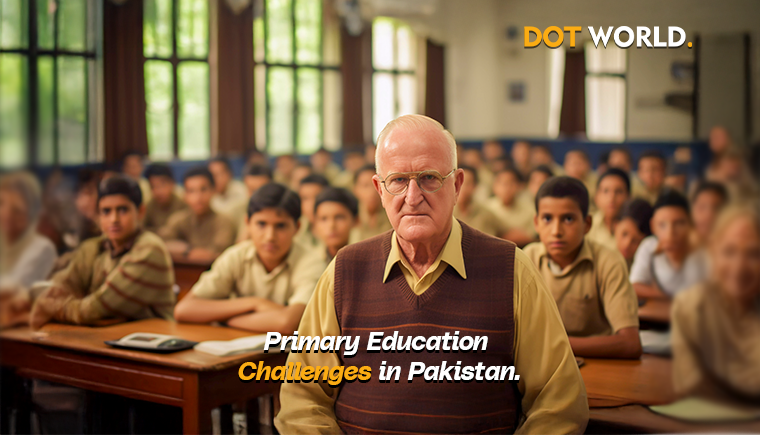
Every child deserves a strong start. In any country, primary education lays the foundation for lifelong learning, critical thinking, and personal growth. But in Pakistan — a nation with immense potential — primary schooling remains one of the most underfunded and misunderstood sectors of the national education system.
Despite constitutional promises and countless policy announcements, Pakistan’s education at the primary level still fails to meet basic standards. From outdated curriculums and ghost schools to gender inequality and teacher absenteeism, the challenges are overwhelming — but not insurmountable.
In this blog, we’ll explore the harsh realities, systemic flaws, and potential solutions for improving quality education in Pakistan at the primary level.
Why Primary Education Matters
The earliest years of schooling shape a child’s ability to read, write, think, and imagine. If primary education is neglected, everything that follows — from secondary school to higher education — rests on a weak base.
In developed countries, governments pour resources into primary schooling because they understand its value. In contrast, Pakistan’s education system often treats this stage as an afterthought — a box to check rather than a pillar to build upon.
A Snapshot of the Crisis
- Out-of-School Children: Over 22 million children are out of school in Pakistan — most of them at the primary level.
- Dropout Rates: Nearly 45% of students drop out before completing Class 5.
- Gender Disparity: Girls are disproportionately affected, especially in rural and conservative areas.
- Infrastructure Gaps: Thousands of government schools lack toilets, clean water, or even roofs.
- Learning Outcomes: According to ASER Pakistan, a Class 5 student often can’t read a Class 2-level sentence in Urdu or English.
These staggering facts are explored further in our video on the reality of Pakistan’s education system, which reveals how poor planning and lack of accountability are crushing futures.
Barriers to Quality Primary Schooling
1. Teacher Absenteeism and Low Training
A significant number of government schoolteachers are either absent or poorly trained. Without motivated and skilled educators, primary schooling cannot fulfill its purpose.
2. Poor Curriculum Design
The textbooks used in Pakistan’s education system are often outdated, factually incorrect, and lack cultural relevance. They encourage rote memorization over critical thinking, especially in primary education.
3. Language Confusion
Children are expected to learn in Urdu, English, or regional languages — often without proper instruction in any. This confusion negatively affects comprehension and learning outcomes.
4. Urban-Rural Divide
Quality education in Pakistan is deeply unequal. Urban areas offer better facilities and teaching quality, while rural students are often left behind with little to no resources.
Our Real Story of Karachi captures this divide in a powerful way — showing how location alone can decide the fate of a child’s future.
The Hidden Costs of Free Education
Although primary education is officially “free” in government schools, hidden costs make it inaccessible for many families:
- Uniforms and books
- Transportation
- Lost wages when children help at home instead of going to school
The burden is especially harsh for low-income families, who must choose between sending their child to school or feeding them.
The Private vs. Public School Dilemma
In response to the public sector’s failures, a booming private school industry has emerged. While these schools are often better managed, they’re not accessible to the majority of Pakistanis.
So now, Pakistan’s education system is essentially divided between the elite and everyone else — creating a long-term socioeconomic gap.
We dive deeper into this inequality in our video: Is Education Really a Trap?. When primary schooling becomes a privilege instead of a right, the cycle of poverty deepens.
Government Initiatives: Are They Working?
Programs like the Punjab Education Sector Reform Program (PESRP) and the Sindh Education Reform Program were launched with great hope. However, corruption, mismanagement, and lack of implementation have diluted their impact.
A classic example of policy failure and institutional decay can be seen in our PIA documentary. The same neglect and lack of vision that grounded our national airline continues to haunt Pakistan’s education system.
Solutions for Improving Primary Education in Pakistan
1. Invest in Teacher Training
We need rigorous teacher certification programs and continuous development workshops. A well-trained teacher is the heart of effective primary schooling.
2. Decentralize Education Policy
Allow provinces and even districts to tailor their primary education programs based on local needs rather than enforcing a one-size-fits-all approach.
3. Embrace Digital Learning
Technology can bridge many gaps — but only if implemented properly. Our EV documentary illustrates how innovation can disrupt outdated systems. The same applies to quality education in Pakistan — especially through tablets, digital classrooms, and e-learning platforms.
4. Community Involvement
Parents, local leaders, and school management committees should play an active role in school monitoring and decision-making.
5. Performance-Based Funding
Reward schools that perform well and penalize those that neglect their responsibilities. This will create a performance-driven culture in Pakistan’s education sector.
The Role of NGOs and the Private Sector
Many NGOs are stepping in to fill the void. The Citizens Foundation (TCF), CARE Foundation, and others are providing quality education in Pakistan in areas where the state has failed.
At MyDotWorld, we also believe in using digital media to expose these issues and support grassroots efforts. Explore our brand collaboration page to see how your organization can make a difference.
Parental Mindsets Must Also Evolve
In many cases, it’s not just the system — but social attitudes that hinder progress. Some families undervalue primary education, seeing it as unnecessary, especially for girls.
Changing mindsets requires awareness campaigns, role models, and a national commitment to human capital.
Final Thoughts
The crisis in primary education is not just an educational issue — it’s a national emergency. A nation cannot progress when nearly half of its children never complete primary schooling.
To build a stronger, more equitable Pakistan, we must reimagine what quality education in Pakistan truly means — and commit to delivering it.
Visit MyDotWorld’s blog for more insights, and join our mission to rebuild Pakistan’s education from the ground up.
