
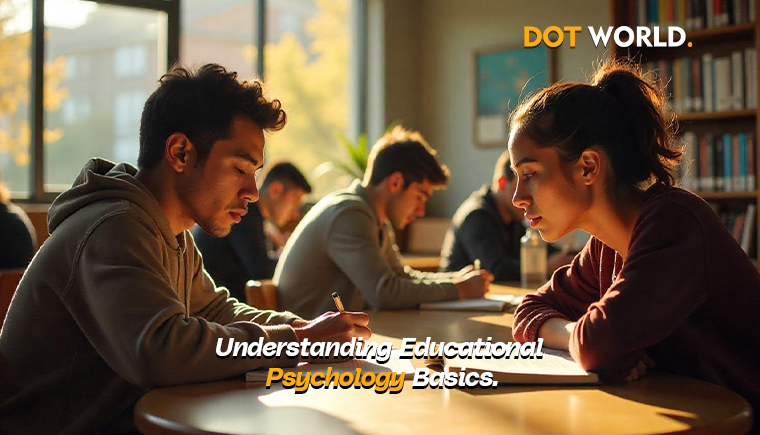
Understanding Educational Psychology Basics: What Every Educator and Parent Should Know
Education is more than just delivering information. It’s about understanding how children think, feel, and grow. And that’s exactly where educational psychology comes in.
This field of study dives into how people learn — looking at emotions, memory, motivation, environment, and even personality. Whether you’re a teacher, a parent, or a policymaker, having a basic grasp of educational psychology can dramatically improve your ability to support student success.
In a country like Pakistan, where education systems are often rigid and outdated, integrating even the basics of educational psychology can transform how we approach child development and influence positive learning behavior in classrooms and homes.
What Is Educational Psychology?
Educational psychology is the scientific study of how people learn and retain knowledge, primarily in educational settings. It combines insights from psychology, cognitive science, neuroscience, and pedagogy to understand learning at different developmental stages.
Key areas include:
- Cognitive development
- Emotional and social development
- Motivation and mindset
- Learning disabilities
- Behavioral management
This understanding is essential for designing better curriculums, developing effective teaching strategies, and creating inclusive environments that cater to individual needs.
Why Educational Psychology Matters in Pakistan
In Pakistan’s education system, the focus has traditionally been on memorization and grades. Emotional well-being, learning preferences, or mental health rarely get attention in classrooms.
But without an understanding of learning behavior, we cannot expect students to thrive — especially when many face socio-economic challenges, trauma, or learning differences.
In our Reality of Pakistan’s Education System video, we expose how institutional failure overlooks the human side of learning. It’s clear that reform must begin with child development at the center.
The Link Between Child Development and Learning
Children go through distinct stages of physical, emotional, and intellectual growth. Each stage impacts how they process information and respond to their environment.
Jean Piaget, a pioneer in educational psychology, outlined four stages of cognitive development:
- Sensorimotor (0–2 years)
- Preoperational (2–7 years)
- Concrete Operational (7–11 years)
- Formal Operational (12+ years)
Understanding these stages helps teachers align lesson plans with students’ developmental readiness — a practice still rare in Pakistan’s education system.
By tailoring education to a child’s cognitive level, we support healthier learning behavior and long-term retention of knowledge.
Motivation and Learning Behavior
One of the most critical contributions of educational psychology is understanding what motivates students.
Types of motivation include:
- Intrinsic Motivation (learning for the joy of learning)
- Extrinsic Motivation (learning to earn rewards or avoid punishment)
In many Pakistani classrooms, only extrinsic motivation is used — exam results, fear of punishment, or teacher approval. But research shows that nurturing intrinsic motivation leads to better engagement and creativity.
In our video: Is Education Really a Trap?, we explore how pressure-driven environments can suppress curiosity, leading to disinterest and burnout — especially among young learners.
Learning Styles and Individual Differences
Educational psychology emphasizes that every student learns differently. Some are visual learners, others are auditory or kinesthetic. Recognizing this is key to developing inclusive education models.
But in our current system, every child is expected to learn in the same way, at the same pace. This one-size-fits-all approach disregards unique learning behavior and causes many students to fall behind unnecessarily.
The Role of Emotional Intelligence in Learning
A child’s emotional state significantly affects their ability to learn. Anxiety, depression, or fear can block memory formation and concentration.
Educators trained in educational psychology are better equipped to:
- Identify emotional distress
- Create supportive environments
- Encourage resilience and confidence
- Build empathy and collaboration
Schools that value child development beyond textbooks foster students who are not only academically capable but emotionally balanced.
Behavioral Issues and Discipline
Misbehavior is often misinterpreted. What looks like defiance could actually be a cry for help, a learning disability, or a lack of stimulation.
Through the lens of educational psychology, discipline becomes a tool for guidance, not punishment. Teachers learn how to:
- Redirect rather than punish
- Use positive reinforcement
- Understand root causes of behavioral issues
- Promote self-regulation
In Pakistan’s education system, where corporal punishment still exists in some areas, such an approach can bring a major cultural shift — one aligned with modern human rights and developmental science.
Our Real Story of Karachi touches on how neglect and misunderstanding of youth behavior can create larger social issues — ones that start in early schooling.
The Importance of Parent Involvement
Educational psychology doesn’t just belong in classrooms. Parents play a massive role in shaping learning behavior. Consistency between home and school expectations greatly improves student outcomes.
When parents understand child development, they become better supporters, not just critics. Things like:
- Regular encouragement
- Establishing routines
- Supporting emotional health
… can all help in raising confident, capable learners.
At MyDotWorld, we’re working to bridge this home-school gap by educating parents through stories, videos, and blogs that promote positive learning environments.
Educational Psychology and Special Needs
Every child deserves a chance — including those with ADHD, dyslexia, autism, or emotional disorders.
Educational psychology equips teachers and schools with tools to identify and support these children. Yet in Pakistan’s education system, special needs education is still vastly underdeveloped.
Incorporating this knowledge means creating:
- Individualized learning plans
- Teacher training in inclusive strategies
- Access to counselors and therapists
- Collaboration between parents and specialists
This approach ensures every child — regardless of ability — receives education tailored to their needs.
A Path Forward: Integrating Educational Psychology in Pakistan
For Pakistan’s education system to evolve meaningfully, we must:
- Include educational psychology in teacher training
- Raise awareness among parents and school administrators
- Integrate psychological assessments into schooling systems
- Replace fear-based models with growth-oriented ones
Our Brand Collaboration initiative is one way to bring such practices into the mainstream through partnerships with experts, organizations, and education reformers.
Final Thoughts
Understanding the basics of educational psychology isn’t just for experts — it’s a tool for anyone involved in shaping young minds. It shifts our focus from “What are you teaching?” to “How is the child learning?”
By prioritizing child development and respecting learning behavior, we create systems that are not only more effective — but more humane.
At MyDotWorld, we believe that true progress in education begins with understanding. The more we learn about how children learn, the better we can serve them.
