
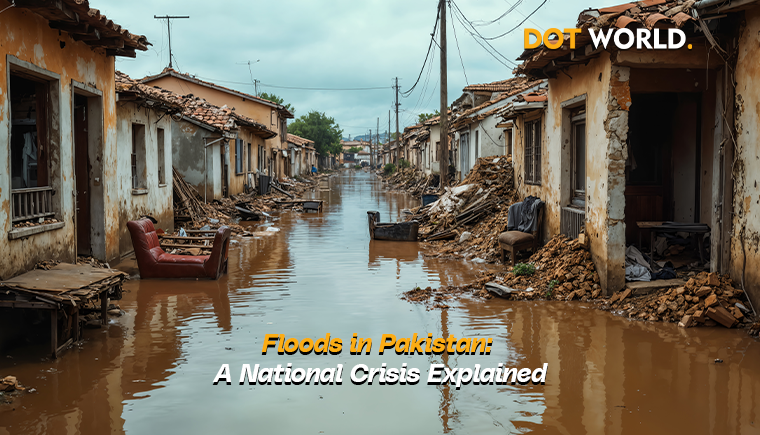
Every year, Pakistan finds itself battling devastating floods that claim lives, destroy infrastructure, and displace millions of families. The recurring flood in Pakistan is not just a natural calamity but also a reflection of weak planning, fragile infrastructure, and the growing threat of climate change. Despite repeated warnings, effective disaster management remains a serious challenge.
This blog takes a detailed look into the history, causes, and consequences of flooding in Pakistan, while also discussing sustainable solutions for the future.
1. Why Floods Happen in Pakistan
Floods are not new to Pakistan. The country’s geography, heavy dependence on the Indus River system, and seasonal monsoon rains make it highly vulnerable. However, the intensity of flood in Pakistan has worsened over the years due to:
- Climate Change: Erratic rainfall, melting glaciers, and rising temperatures increase flood risks.
- Deforestation: Lack of trees leads to soil erosion and uncontrolled water flow.
- Poor Urban Planning: Cities like Karachi and Lahore face urban flooding due to blocked drainage systems.
- Weak Disaster Management: Lack of preparedness worsens the impact of every flood in Pakistan.
2. Historical Floods in Pakistan
Some of the worst floods in Pakistan include:
- 2010 Super Floods: Affected over 20 million people, one of the deadliest floods in the world’s history.
- 2022 Flood in Pakistan: Destroyed villages, displaced 33 million people, and caused damages of over $30 billion.
- Recurring Monsoon Floods: Every few years, provinces like Sindh, Punjab, and KPK face catastrophic flooding.
These disasters highlight how vulnerable Pakistan is to climate-related crises.
3. Climate Change and Pakistan’s Vulnerability
The connection between climate change and flooding in Pakistan is undeniable. According to global climate experts, Pakistan is among the top 10 countries most at risk from climate disasters. The 2022 flood in Pakistan was worsened by:
- Melting glaciers in Gilgit-Baltistan.
- Heavier-than-normal monsoon rains.
- Rising sea levels increasing coastal flooding risks.
The irony is that while Pakistan contributes less than 1% to global carbon emissions, it suffers some of the worst impacts of climate change.
4. Human and Economic Impacts
The impact of a flood in Pakistan goes far beyond water. Each disaster creates a ripple effect on Pakistan’s economy and society:
- Loss of Human Lives: Thousands die in each major flood.
- Displacement: Millions are forced to leave homes, creating refugee-like conditions.
- Agricultural Damage: Crops are destroyed, leading to food shortages.
- Health Crises: Stagnant water spreads diseases like cholera and malaria.
- Economic Losses: Billions lost due to destroyed roads, bridges, and industries.
5. The Role of Disaster Management
Effective disaster management can reduce flood damage significantly. Unfortunately, Pakistan has often been reactive instead of proactive. Weak institutions, limited funding, and lack of coordination between provincial and federal agencies worsen the crisis.
Key challenges in Pakistan’s disaster management include:
- Poor early warning systems.
- Weak evacuation planning.
- Lack of flood-resilient infrastructure.
- Limited international cooperation.
6. Government and International Response
During the 2022 flood in Pakistan, the world witnessed unprecedented destruction. Countries and organizations like the UN, World Bank, and IMF pledged billions in aid. Yet, aid alone is not enough — sustainable policies are needed.
Pakistan’s government has pledged to improve disaster management and climate adaptation, but execution remains slow.
7. The Way Forward – Solutions for Pakistan
To prevent another national tragedy, Pakistan must adopt a comprehensive approach:
a) Stronger Disaster Management
- Establish modern flood monitoring and early warning systems.
- Train local communities in evacuation and safety.
b) Climate Adaptation Policies
- Invest in climate-resilient infrastructure.
- Create water reservoirs to manage excess rainfall.
c) Urban Planning Reforms
- Stop construction on natural waterways.
- Improve drainage systems in major cities.
d) Reforestation Campaigns
- Launch nationwide tree-planting drives.
- Encourage community participation in forest protection.
8. How Citizens Can Contribute
While the state carries the primary responsibility, citizens also play a vital role in tackling flood in Pakistan:
- Avoid throwing garbage into drains and rivers.
- Support NGOs working in flood relief.
- Spread awareness about climate change and environmental protection.
- Pressure policymakers for stronger disaster management reforms.
Conclusion – A National Wake-Up Call
The recurring flood in Pakistan is no longer just a seasonal inconvenience — it is a national crisis fueled by climate change and mismanagement. If Pakistan fails to strengthen its disaster management systems, the cycle of destruction will continue, putting millions at risk every year.
The time to act is now. With strong planning, climate adaptation, and public awareness, Pakistan can reduce the devastation of floods and protect future generations.
