
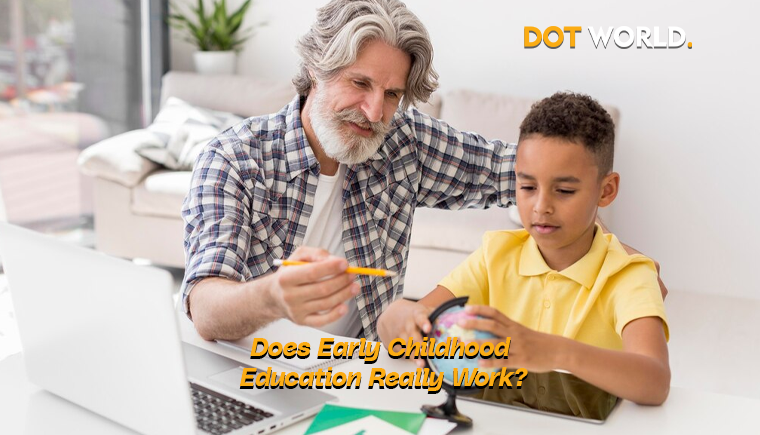
The early years of a child’s life are often described as the most important for growth and learning. The concept of early childhood education (ECE) has gained global attention because research shows that the first five years significantly shape brain development, behavior, and long-term success. But in a country like Pakistan, where education policy is inconsistent and resources are limited, many ask: Does early childhood education really work, or is it just another idealistic theory?
This blog explores the science of child psychology, the role of ECE in Pakistan, global examples, and whether investing in early years truly creates long-lasting benefits.
Understanding Early Childhood Education
Early childhood education typically refers to structured learning experiences for children between ages 3–6 before they enter formal primary school. Unlike rote-based traditional schooling, ECE emphasizes play-based, creative, and interactive methods that nurture curiosity and confidence.
Core elements include:
- Developing language and communication skills.
- Encouraging social interaction.
- Building problem-solving abilities.
- Supporting emotional growth.
👉 Related: How Childhood Education Shapes Future Society
The Science Behind Brain Development
Neuroscience shows that brain development is most rapid during the first five years of life. Over 1 million neural connections form every second, influenced by stimulation, nutrition, and environment.
If a child is exposed to early childhood education during this stage, they develop better memory, cognitive skills, and emotional regulation. On the other hand, neglect or lack of stimulation can cause developmental delays that are hard to reverse later in life.
This is where child psychology intersects with policy: ECE is not just about preparing kids for school; it’s about wiring their brains for lifelong learning.
Early Childhood Education in Pakistan
In Pakistan, the role of early childhood education has been recognized in theory but poorly implemented in practice. Challenges include:
- Weak Education Policy – Although policies mention ECE, funding and training programs remain minimal.
- Urban-Rural Divide – Access is better in cities but almost absent in rural areas.
- Untrained Teachers – Many teachers treat preschool like primary schooling, relying on memorization instead of interactive play.
- Infrastructure Gaps – Thousands of government schools lack proper classrooms for early learners.
👉 Related: Primary Education Challenges in Pakistan
Child Psychology and Long-Term Benefits
Child psychology studies consistently show that students who attend quality early childhood education programs:
- Perform better academically in later years.
- Show stronger social skills.
- Have higher graduation and employment rates.
- Are less likely to drop out or engage in crime.
These benefits extend beyond the individual, contributing to social stability and national productivity. For Pakistan, where millions of young people enter the workforce every year, the connection between ECE and employability cannot be ignored.
👉 Related: Education vs Employability: The Disconnect
Global Lessons in Early Childhood Education
Countries like Finland, Japan, and New Zealand have shown how strong investments in early childhood education create lifelong advantages. Their students consistently perform better in international assessments and display creativity and problem-solving skills that fuel innovation.
In contrast, Pakistan continues to underinvest, leaving millions without structured preschool exposure. The gap is not just about schools—it’s about national priorities.
Education Policy: The Missing Link
For ECE to succeed in Pakistan, education policy must address several critical areas:
- Curriculum Development – National standards should reflect modern child psychology and brain science, not outdated rote learning.
- Teacher Training – Preschool educators need specialized training in play-based and interactive methods.
- Public-Private Partnerships – NGOs and private schools can fill gaps where government resources are insufficient.
- Monitoring & Evaluation – Regular assessments to measure outcomes in literacy, social skills, and creativity.
👉 Related: Breaking Down the 18th Amendment in Education
Brain Development and Social Impact
Strong early childhood education does not just create smarter students—it creates better citizens. Children who develop empathy, communication, and problem-solving skills early on are more likely to contribute positively to society.
From a brain development perspective, ECE reduces inequality by giving disadvantaged children a fair start. Without it, social gaps widen, as wealthier families access private preschools while poorer children fall behind.
The Human Side: Stories from Parents and Teachers
- A mother in Karachi shared how her son’s confidence grew after attending an NGO-run preschool, showing clear signs of better brain development compared to peers.
- A rural teacher in Sindh highlighted that once ECE classrooms were introduced, dropouts in later grades decreased.
- Parents in Islamabad emphasized that structured early childhood education made their children more disciplined and eager learners.
These examples show that ECE is not just theory—it works when implemented with proper support.
Does Early Childhood Education Really Work?
The evidence is clear: early childhood education works. It shapes brain development, builds social-emotional skills, and prepares children for lifelong success. But in Pakistan, its potential remains underutilized due to weak education policy, lack of teacher training, and poor infrastructure.
If Pakistan truly wants to transform its future, investing in ECE must be a national priority. Ignoring the first five years means compromising the nation’s intellectual and social capital.
Conclusion
So, does early childhood education really work? Absolutely. But only if implemented with the right strategy. By aligning education policy with insights from child psychology and neuroscience, Pakistan can turn its youth bulge into a productive, innovative generation.
The early years are not just preparation for school—they are preparation for life. If Pakistan fails to act now, the cost will be far greater than building preschools; it will be a generation unprepared for the challenges of tomorrow.
Further Reading
- How Childhood Education Shapes Future Society
- Primary Education Challenges in Pakistan
- Education vs Employability: The Disconnect
Breaking Down the 18th Amendment in Education
You’ll be interested: Viagra Super Active: what it is, who considers it, and what to do next
