Introduction
In recent years, Bani Gala has become one of the most discussed locations in Pakistan’s political landscape. Once known primarily as the serene residence of former Prime Minister Imran Khan, it has now transformed into a hotspot for political news. Events such as police raids and ongoing controversies have made Bani Gala a central point of media coverage, fueling debates about politics, democracy, and the role of the press in shaping public perception.
This blog explores how Bani Gala’s raids are represented in the media, why narratives matter, and what this tells us about Pakistan’s political environment.
The Symbolism of Bani Gala
Bani Gala is more than a residential area in Islamabad. For years, it has been associated with political leadership and decision-making. The house itself has become symbolic—representing political power, opposition struggles, and even the clash between state institutions and popular leaders.
👉 Related: Bani Gala: From Residence to Political Hub
Police Raids: Events that Spark Narratives
The police raids on Bani Gala have been major breaking points in Pakistan’s political news cycle. Each raid is reported differently across TV channels, newspapers, and online platforms. While some present them as necessary actions under the law, others frame them as political victimization.
This difference in portrayal creates two conflicting narratives:
- For some, raids signify law enforcement doing its duty.
- For others, they represent state overreach and political oppression.
The truth often lies somewhere in between, but the way raids are covered by the media shapes how the public interprets these events.
Media Coverage: Biased or Balanced?
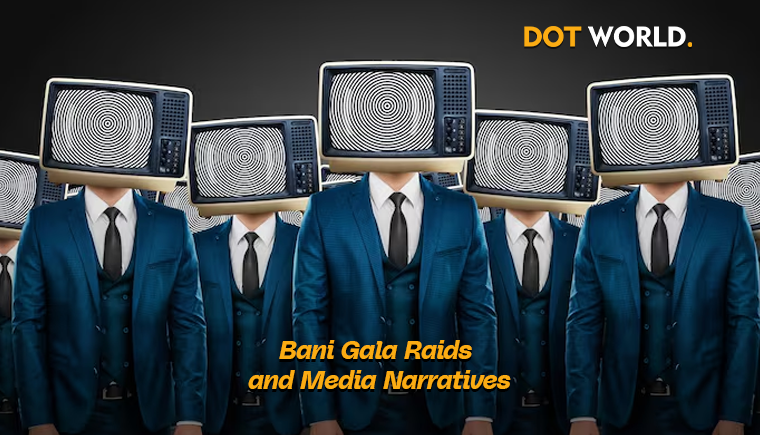
Media coverage of Bani Gala reveals much about the current state of Pakistan’s journalism. Different news channels tend to frame stories in ways that align with their editorial stance or political affiliations. This leads to questions of media bias and the ethics of political reporting.
- Pro-government outlets may highlight the legality of police raids.
- Opposition-leaning platforms may emphasize political victimization.
- Independent voices often struggle to cut through the noise.
👉 Related: Why Political Drama Dominates Our Headlines
This division in political news reporting has made it difficult for citizens to access objective information, fueling polarization in society.
The Role of Breaking News Culture
Pakistan’s media is driven heavily by the culture of breaking news. Whenever something happens at Bani Gala—whether it is a police raid or a political statement—it is broadcast live within minutes. This rush for immediacy often sacrifices accuracy, leading to misinformation or exaggerated reporting.
The need for ratings and media coverage leads channels to dramatize events, which in turn influences how the public perceives the situation.
👉 Related: How News Channels Manipulate Public Opinion
Narratives and Public Perception
The way Bani Gala raids are covered by the media has a direct impact on how citizens view the political process. Narratives can create sympathy for political figures or justify state actions, depending on how stories are framed.
For example:
- A headline saying “Law enforcement ensures justice at Bani Gala” builds trust in institutions.
- A headline saying “Police raid opposition leader’s residence” fuels anger against the state.
These subtle differences show how media coverage shapes public trust and political polarization.
Political News and Media Responsibility
The issue is not just about Bani Gala or police raids—it is about the responsibility of the press. In a democracy, political news should inform citizens fairly and without bias. However, the increasing trend of sensationalism means that public debate is often based on half-truths.
This raises important questions:
- Should the media prioritize accuracy over speed?
- How can media outlets reduce bias while reporting political news?
- What role should regulatory authorities play in ensuring balanced media coverage?
Media Narratives vs Ground Reality
There is often a gap between the media narratives around Bani Gala and the ground reality. For those directly affected, such as residents, neighbors, or even supporters gathered outside the residence, the events may feel very different than how they are shown on television.
Social media platforms like Twitter and YouTube have played a key role in exposing alternative perspectives. Videos recorded by ordinary people often challenge mainstream media coverage and provide counter-narratives.
👉 Watch: Real Story of Karachi
Lessons for the Future
The repeated focus on Bani Gala highlights three important lessons for Pakistan’s political and media landscape:
- Media Ethics: Journalism needs to balance speed with responsibility.
- Public Awareness: Citizens should learn to question political news and seek multiple sources.
- Institutional Reforms: The relationship between law enforcement and political figures must be managed transparently to reduce suspicion of bias.
Conclusion
The story of Bani Gala, its police raids, and the media coverage around them is a reflection of Pakistan’s broader political environment. Narratives built by the press have the power to shape public perception, influence politics, and even destabilize trust in democratic institutions.
As Pakistan continues to face political challenges, the responsibility of reporting political news fairly becomes even more urgent. Whether it is about Bani Gala or any other political hotspot, the need for balanced, ethical, and transparent journalism is critical for the health of democracy.
👉 Further Reading: