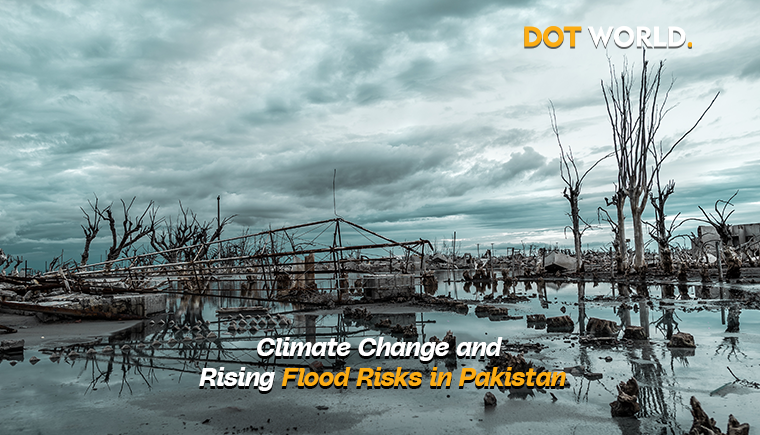
The recurring flood in Pakistan has become one of the most pressing national crises of our time. While floods are not new to the country, the scale and frequency of these disasters are increasing every year due to climate change and global warming. Instead of being occasional natural calamities, floods are now regular occurrences, disrupting lives, destroying infrastructure, and draining the economy.
As Pakistan faces record-breaking rainfall, melting glaciers, and extreme weather events, it has become clear that the climate crisis is no longer a distant threat — it is already here. Understanding the connection between climate change, floods, and their long-term impact is vital if the country wants to adapt and survive.
The Link Between Climate Change and Floods
Globally, scientists agree that climate change is intensifying weather patterns. In the case of Pakistan, this means heavier monsoons, unexpected downpours, and rapid glacial melting in the north. Together, these factors increase the risk of a devastating flood in Pakistan every year.
- Global warming has raised average temperatures, leading to faster glacier melt.
- Higher rainfall during shorter periods overwhelms rivers and drainage systems.
- Shifts in weather patterns bring monsoons earlier or later than expected.
Pakistan, with its fragile infrastructure and unplanned cities, is paying the price for a crisis it contributed very little to globally.
👉 Related read: Floods in Pakistan: A National Crisis Explained
Global Warming: The Silent Accelerator
The role of global warming in worsening floods cannot be ignored. Rising global temperatures mean:
- Glacial Melt: Pakistan’s northern mountains contain over 7,000 glaciers, the largest outside the polar regions. With global warming, these glaciers are melting at alarming rates, swelling rivers and increasing flood risks.
- Warmer Atmosphere: A warmer atmosphere holds more moisture, which results in heavier rainfall. This is why monsoon seasons are producing torrential downpours instead of steady rains.
- Sea-Level Rise: Coastal areas like Karachi face dual threats — urban flooding during monsoons and sea intrusion due to rising ocean levels.
Thus, climate change amplifies the natural risks, turning them into disasters.
Flood in Pakistan: The Economic and Social Toll
Every flood in Pakistan is not just a natural event; it is an economic shock. The 2022 floods, for instance, submerged one-third of the country, causing damages of over $30 billion.
- Agriculture losses ruined crops like rice, cotton, and wheat.
- Infrastructure damage destroyed roads, schools, and bridges.
- Millions of people were displaced, leading to long-term poverty.
Floods also disrupt children’s education, worsen health crises, and increase unemployment. Each wave of destruction pushes vulnerable families deeper into poverty.
👉 You may also like: Floods and Their Impact on Pakistan’s Economy
The Role of Rainfall in Flood Disasters
Heavy rainfall is both a blessing and a curse for Pakistan. While it is crucial for agriculture, unchecked rains often turn into deadly floods. Poor urban planning and weak drainage systems make the situation worse. Cities like Karachi are prime examples, where every monsoon brings urban flooding due to blocked stormwater drains and encroachments.
In rural areas, excessive rainfall destroys crops and washes away fertile soil, leading to long-term agricultural decline. Instead of harvesting opportunities, farmers end up battling disasters.
Pakistan’s Vulnerability to Climate Change
Pakistan contributes less than 1% of global carbon emissions, yet it is among the most affected countries by climate change. According to the Global Climate Risk Index, Pakistan consistently ranks among the top 10 countries vulnerable to climate disasters.
Key reasons for this vulnerability include:
- Geography: Presence of glaciers, rivers, and monsoon belts.
- Poor infrastructure: Weak dams, drainage systems, and embankments.
- Rapid urbanization: Cities expanding without proper planning.
- Deforestation: Reduced forest cover leads to soil erosion and river flooding.
These weaknesses mean that each flood in Pakistan turns into a humanitarian and economic disaster.
How Climate Change Affects Rural and Urban Lives
- Rural Impact: Farmers lose crops and livestock, worsening food security. Flooded villages face long recovery periods.
- Urban Impact: Cities like Karachi, Lahore, and Islamabad face rainfall-induced flash floods due to blocked drains and unplanned construction.
Both urban and rural areas bear the brunt of climate change, making adaptation strategies a national necessity.
👉 Watch this: Real Story of Karachi — a documentary-style video explaining why cities flood every year.
Can Pakistan Adapt to Rising Flood Risks?
Yes — but it requires political will and investment. To reduce the risk of flood in Pakistan, the government must:
- Build Climate-Resilient Infrastructure: Stronger dams, drainage systems, and embankments.
- Promote Reforestation: Forests act as natural flood barriers.
- Modernize Urban Planning: Cities must have rainwater harvesting and advanced drainage systems.
- Adopt Climate-Smart Agriculture: Use flood-resistant seeds and water-efficient techniques.
- Improve Early Warning Systems: Better forecasting can save lives and property.
👉 Related: How KPK Struggles Against Flash Floods
The Global Responsibility
While Pakistan must strengthen its climate response, the international community also has a responsibility. Industrialized nations, which are primarily responsible for global warming, must provide financial aid, technology, and policy support to vulnerable nations. Climate justice demands that countries like Pakistan should not pay the highest price for a crisis they did not create.
Conclusion
The flood in Pakistan is no longer just a seasonal event — it is a direct consequence of climate change and global warming. Increasing rainfall, melting glaciers, and poor infrastructure make the country extremely vulnerable to recurring disasters. Unless urgent measures are taken, the cycle of destruction will continue to cost lives, livelihoods, and billions of dollars in economic losses.
For Pakistan, adapting to climate change is not optional — it is a matter of survival. By strengthening disaster management, reforming urban planning, and building climate-resilient infrastructure, the nation can begin to protect itself against future floods.
👉 Explore more: