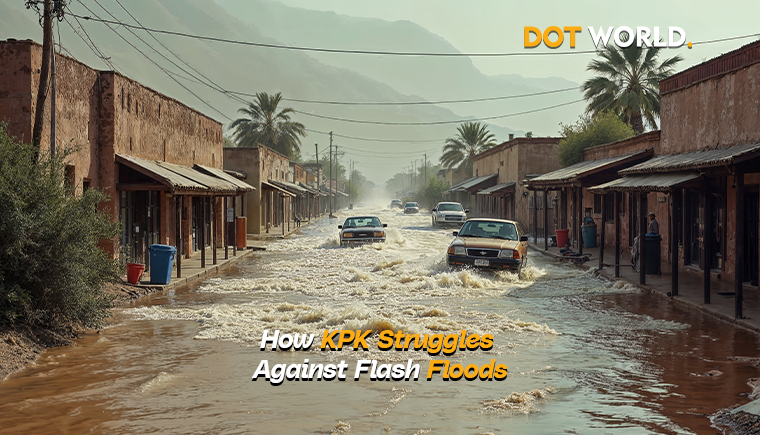
Every monsoon season, parts of KPK (Khyber Pakhtunkhwa) are devastated by sudden flash floods. Unlike gradual rising waters, these floods strike with little warning, washing away villages, destroying crops, and uprooting lives within minutes. The issue is not only regional but a national concern, as every flood in Pakistan impacts millions of people and weakens the country’s already fragile economy.
Why does KPK continue to struggle despite repeated promises of stronger flood protection and disaster response? This blog explores the root causes, historical context, and potential solutions to manage the recurring crisis.
1. Understanding Flash Floods in KPK
Flash floods are sudden surges of water caused by intense rainfall, glacial melting, or cloudbursts in mountainous regions. In KPK, geography plays a major role:
- The province is surrounded by mountains, rivers, and valleys.
- Narrow river channels overflow rapidly after heavy rain.
- Communities built near riverbanks and hillsides face the highest risks.
Unlike lowland floods that rise slowly, flash floods in KPK arrive suddenly, leaving little time for evacuation.
2. Why KPK is Vulnerable to Flooding
a) Geography & Climate
The province’s hilly terrain, coupled with unpredictable rainfall patterns, makes KPK especially vulnerable. Climate change has also intensified monsoon rains in Pakistan, causing more frequent and severe floods.
b) Glacial Melting
KPK is home to some of the largest glaciers in South Asia. Rising global temperatures accelerate melting, leading to glacial lake outburst floods (GLOFs).
c) Poor Infrastructure
Rural roads, bridges, and flood embankments are either weak or nonexistent. When flash floods hit, connectivity is lost, delaying disaster response.
d) Deforestation
Unchecked logging in the northern areas has removed natural barriers. Without forests, rainwater runs off faster, triggering floods and landslides.
3. Historical Floods in KPK
The 2010 Super Floods
One of the worst floods in Pakistan’s history devastated KPK in 2010. Entire villages were swept away, thousands died, and millions were displaced nationwide.
The 2022 Monsoon Floods
In 2022, KPK again faced massive destruction. Districts like Swat and Dir saw bridges, hotels, and roads washed away by flash floods. Families living by rivers lost everything overnight.
Annual Flooding
Almost every year, parts of KPK report flood-related destruction, showing how little progress has been made in flood preparedness.
4. Human & Economic Impacts
The consequences of flash floods in KPK extend far beyond physical damage:
- Loss of Lives & Livelihoods: Families lose breadwinners, homes, and farms.
- Education Disruption: Schools are destroyed or turned into shelters.
- Healthcare Challenges: Outbreaks of malaria, cholera, and other waterborne diseases follow.
- Economic Burden: Each flood in Pakistan drains billions from the economy, with KPK often among the hardest hit.
5. Why Disaster Response Remains Weak
Despite knowing the risks, Pakistan’s disaster response system faces serious limitations:
- Delayed Rescue Operations: Lack of helicopters, boats, and equipment in remote areas slows relief work.
- Poor Coordination: Federal, provincial, and local authorities often blame each other instead of acting together.
- Limited Early Warning Systems: Villagers rarely receive timely alerts about incoming floods.
- Underfunded NDMA & PDMA: Agencies responsible for disaster management in Pakistan lack resources and training.
6. Community Struggles in KPK
Local stories highlight the human cost:
- In Swat, families build temporary wooden bridges each year after floods destroy existing ones.
- Farmers in Charsadda lose entire harvests, pushing them deeper into poverty.
- Children in flood-hit KPK villages walk for hours to attend makeshift schools.
These stories reflect not just natural disasters but social neglect.
7. Possible Solutions
a) Stronger Infrastructure
Building flood-resistant bridges, dams, and embankments in KPK can reduce destruction.
b) Early Warning Systems
Digital alerts, community radio, and mobile SMS services can save lives by warning residents ahead of flash floods.
c) Reforestation Programs
Replanting forests in northern Pakistan can act as natural flood barriers.
d) Community Training
Villagers should be trained in basic disaster response techniques like evacuation and first aid.
e) Government Accountability
Authorities must allocate consistent funds to strengthen KPK’s disaster resilience instead of temporary relief packages.
8. The Bigger Picture: Floods in Pakistan
While KPK is highly vulnerable, the broader issue is that every flood in Pakistan exposes the same weaknesses: poor planning, weak governance, and lack of preparedness. To protect millions, Pakistan must treat floods as a national security threat, not just a seasonal inconvenience.
Conclusion
The recurring flash floods in KPK highlight both the power of nature and the failure of governance. Year after year, people lose their homes and livelihoods, while the government’s disaster response remains slow and underfunded.
For a stronger future, Pakistan must invest in climate resilience, modern infrastructure, and early warning systems. Otherwise, KPK will continue to pay the highest price whenever the skies open.