
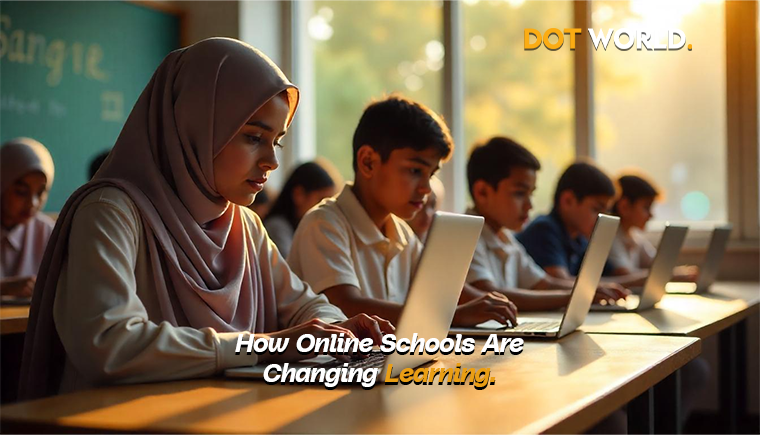
In the wake of a global digital revolution, education is undergoing a transformation like never before. What was once limited to four-walled classrooms and rigid schedules is now breaking free into the flexible, dynamic world of online school platforms. For millions of students across Pakistan and around the world, remote learning isn’t just an alternative — it’s becoming the new normal.
But how exactly are online schools changing the learning experience? And what does this mean for the future of education, especially in a developing country like Pakistan?
Let’s dive into the evolution, impact, and future of digital education, while also exploring where Pakistan stands in this global shift.
A New Era of Learning
In traditional settings, education was mostly defined by physical presence: being in a classroom, attending lectures, and following a timetable. But when COVID-19 forced the world into isolation, schools shut down — and suddenly, millions had to switch to remote learning overnight.
This shift wasn’t just about moving classes to Zoom or Google Meet. It triggered a massive change in how education is delivered, experienced, and accessed.
Today, online schools are not only serving as a temporary fix — they are shaping the future of how we learn.
We’ve captured this evolution visually in our video on Electric Vehicles. While the topic is different, the underlying message is clear: when technology shifts, the world adapts — and education is no exception.
What Makes Online Schools Different?
- Flexibility in Learning
In a traditional system, students are bound by school timings, geography, and physical constraints. Online school platforms remove these barriers. A student in rural Balochistan can access the same quality content as someone in Karachi or Lahore — provided there’s internet access. - Self-Paced Education
Not every child learns at the same speed. Digital education allows students to pause, rewind, or revisit lessons. This personal control enhances understanding and reduces pressure. - Cost-Effectiveness
Many remote learning platforms offer free or affordable content, making it easier for low-income families to access quality education without the heavy burden of tuition, transport, and uniform costs. - Access to Global Resources
With platforms like Coursera, Khan Academy, and Pakistan’s own Edkasa, students now have access to global academic standards. Online schools bring Harvard-level content to a teenager’s bedroom in Multan.
Challenges of Online Education in Pakistan
Despite the promise of digital education, Pakistan faces several roadblocks:
- Internet Connectivity: Many remote areas still lack stable internet, making consistent remote learning impossible.
- Digital Literacy: Students and teachers often struggle with using online platforms effectively.
- Lack of Regulation: With no formal accreditation system, many online schools lack credibility.
Our video on the Reality of Pakistan’s Education System highlights these structural problems — especially the digital divide — in great detail.
These barriers must be addressed if we are to unlock the full potential of online schools in Pakistan.
How Online Schools Are Empowering Marginalized Communities
For students with disabilities, girls in conservative areas, or children in conflict zones, online school offers a rare chance at uninterrupted education.
Imagine a girl in a rural village who is denied school attendance due to cultural norms. Through remote learning, she can still complete her studies without stepping out of her home.
This is the true power of digital education — breaking down walls, literally and metaphorically.
At MyDotWorld, our mission is to highlight exactly these kinds of transformations. Our platform tells real stories of struggle and change, especially in the context of Pakistan’s education system.
The Role of Teachers in Online Schools
Many assume that technology will replace teachers — but the reality is quite the opposite. In fact, the teacher’s role becomes more important in a digital education setup.
- Mentorship: Teachers become guides rather than just lecturers.
- Content Creators: Many now record their own lessons and design unique online modules.
- Tech Navigators: Educators must understand the tools that enable remote learning — from managing virtual classrooms to grading via apps.
For inspiration on how adaptation is necessary for survival, check out our PIA documentary. Much like aviation, education must also innovate or collapse.
Online Schools and the Future of Work
The future job market is tech-driven. AI, coding, digital marketing, and data analytics are becoming basic skills. Online schools are already integrating these into their syllabi, making students career-ready.
Platforms like Digiskills.pk and Coursera are providing industry-relevant courses, training a generation not just to earn degrees — but to build careers.
It’s no longer about getting a certificate. It’s about education that translates into real-world skills.
Community, Collaboration, and Virtual Classrooms
A major criticism of remote learning is that it isolates students. But modern online school platforms are incorporating community tools: discussion forums, group projects, real-time Q&A sessions, and even virtual field trips.
Interaction, collaboration, and engagement are all possible — just in new ways.
Our video on the Real Story of Karachi shows how digital communities can create powerful real-world change. Digital education must follow a similar approach — building not just students, but connected learners.
Government and Policy Shifts in Pakistan
The Pakistani government has started recognizing the need for online schools. Initiatives like TeleSchool and Virtual University are early steps toward digital reform.
But for these efforts to be meaningful, policies must focus on:
- Expanding internet access
- Subsidizing digital devices
- Training teachers in e-learning
Without proper infrastructure, the dream of digital education will remain out of reach.
A Parent’s Role in Online Learning
Parents are no longer just providers — they are co-educators. In a remote learning setup, parental involvement is crucial.
They must:
- Set up study routines
- Monitor screen time
- Encourage engagement and curiosity
We dive deeper into family dynamics and their role in education in our upcoming blogs — keep an eye on MyDotWorld’s blog section.
Final Thoughts
Online schools are not a temporary fix — they are a permanent part of the education landscape now. They are changing the way we teach, the way we learn, and the way we see knowledge.
Pakistan must adapt — not just through tech, but through policy, culture, and community support. The future of remote learning is bright, but only if we light the way intentionally.
Visit MyDotWorld to explore how digital tools are transforming not just education, but lives.
Let’s not just talk about change — let’s log in and learn.
