Introduction
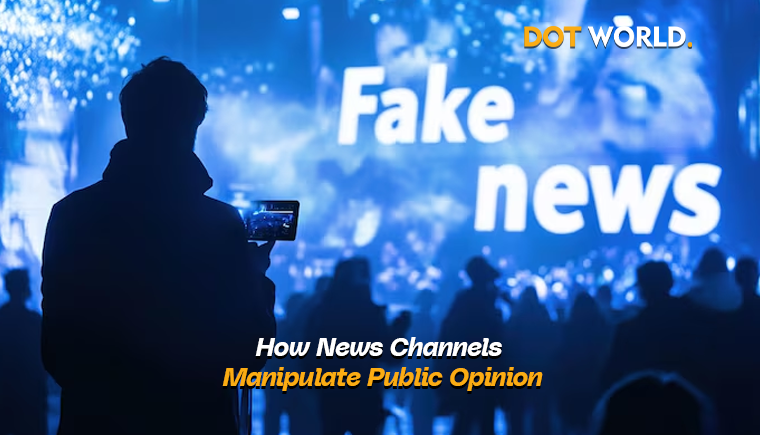
In the age of 24/7 broadcasting, Pakistan news channels have become a dominant force in shaping public opinion. From breaking news banners to sensational talk shows, the media plays a critical role in informing — and sometimes misleading — the masses. While a free press is a pillar of democracy, unchecked media bias and news manipulation can distort reality and influence decisions that affect millions.
This blog will explore how Pakistan news channels operate, the subtle and overt ways they manipulate public opinion, and the impact this has on society and politics.
1. The Power of News in Pakistan
Pakistan news channels reach millions of viewers daily, making them a key source of information for most households. Whether it’s political updates, social issues, or international affairs, the news shapes what people believe and how they react.
However, this power comes with a dangerous potential: if the information is biased or manipulated, public opinion can be steered toward certain narratives, benefiting specific political or corporate interests.
2. Understanding Media Bias
Media bias occurs when journalists or media outlets present news in a way that reflects their own political, financial, or ideological leanings. In Pakistan news channels, bias often appears in:
- Story Selection: Choosing which events to highlight or ignore.
- Framing: Using certain language or visuals to influence perception.
- Guest Panels: Inviting speakers who support a preferred narrative.
- Tone: Using dramatic or emotional wording to provoke specific feelings.
When media bias is present, viewers may unknowingly absorb a skewed version of reality, leading to distorted public opinion.
3. The Techniques of News Manipulation
News manipulation in Pakistan news channels is not always outright lying — often it’s about selective presentation. Common techniques include:
a) Selective Coverage
Giving extensive airtime to certain events while ignoring others, shaping what the audience considers important.
b) Emotional Triggers
Using music, dramatic graphics, and emotional language to make viewers react emotionally rather than think critically.
c) Agenda Setting
Repeatedly covering certain topics to make them a priority in public opinion, even if they aren’t the most urgent issues.
d) False Balance
Presenting fringe views alongside facts as if both are equally valid, leading to confusion.
4. Political Influence on Pakistan News Channels
In Pakistan, media is often tied to political interests. Some Pakistan news channels are owned or funded by individuals or groups with direct links to political parties. This creates a cycle where:
- Newsrooms receive pressure to favor certain politicians.
- Critical stories about allies are downplayed or buried.
- Opponents are highlighted negatively, affecting public opinion.
Such influence erodes public trust and turns journalism into political propaganda.
5. The Social Impact of Media Bias
When media bias and news manipulation become widespread, the consequences for society are severe:
- Polarization: Citizens are divided into opposing camps, each consuming media that reinforces their own beliefs.
- Distrust in Media: People stop believing in journalism altogether, making them more vulnerable to misinformation.
- Policy Distortion: Leaders may act based on manipulated public opinion rather than objective realities.
6. Case Studies of News Manipulation in Pakistan
Several incidents in Pakistan highlight how Pakistan news channels shape public opinion through bias:
- Overemphasis on political scandals while underreporting policy failures.
- Using selective editing to make public figures look bad or overly heroic.
- Giving airtime to conspiracy theories to attract viewers, regardless of accuracy.
7. How Viewers Can Protect Themselves
While media bias is hard to eliminate completely, viewers can take steps to avoid falling victim to news manipulation:
- Diversify Sources: Follow multiple Pakistan news channels with different editorial lines.
- Check Facts: Verify claims through credible, independent sources.
- Question the Narrative: Ask why a story is being told in a certain way.
- Be Aware of Language: Recognize when emotional words are being used to influence perception.
8. The Role of Media Regulation
Pakistan’s media regulators, such as PEMRA, have the responsibility to ensure Pakistan news channels operate ethically. Stronger rules on transparency, conflict of interest, and fact-checking can help reduce media bias and news manipulation.
However, regulation must not become censorship — freedom of the press must be preserved while ensuring accuracy and fairness.
9. The Future of News in Pakistan
As social media platforms rise, Pakistan news channels face new competition. While this offers more diversity in information, it also increases the spread of misinformation. The challenge will be to create a media environment where truth, not manipulation, drives public opinion.
If media houses prioritize integrity over ratings, they can rebuild public trust and fulfill their duty as the fourth pillar of democracy.
Conclusion – Media as a Mirror or a Manipulator?
Pakistan news channels hold incredible influence over public opinion. When they operate with fairness, they become a mirror reflecting society’s truths. But when media bias and news manipulation take over, the mirror distorts reality, leading to division and misinformation.
The responsibility lies not just with journalists but also with viewers to remain informed, skeptical, and proactive in seeking balanced news. Only then can we ensure that the media serves the people, rather than manipulating them.