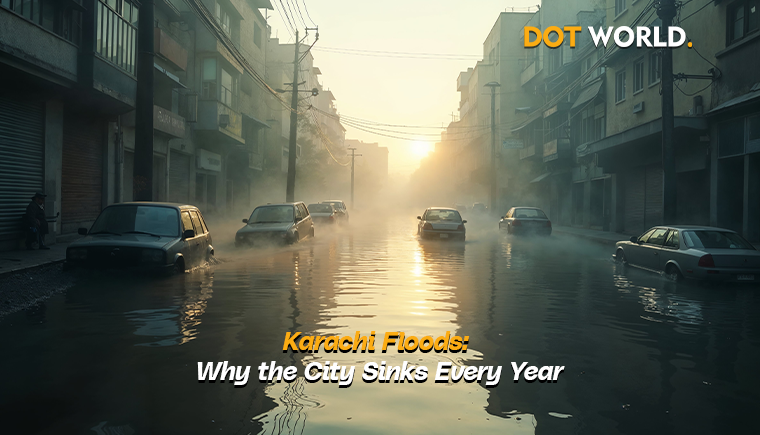
Every monsoon season, Karachi – Pakistan’s largest and most vibrant city – turns into a waterlogged disaster zone. Streets transform into rivers, homes flood, and the city comes to a standstill. The recurring flood in Karachi is not just the result of heavy rain but a combination of poor urban planning, weak governance, and broken infrastructure.
Why does a city that generates over 60% of Pakistan’s revenue fail to manage its own drainage issues? This blog explores the root causes of urban flooding in Karachi, its devastating impacts, and potential solutions to save the city from sinking every year.
1. The Annual Monsoon Nightmare
For residents of Karachi, the monsoon season is not about joy but fear. When heavy rains fall, the city drowns in chaos:
- Roads become impassable.
- Electricity shuts down for days.
- Sewage water mixes with rainwater, creating health hazards.
- Public transport halts, trapping citizens in flooded neighborhoods.
The problem is not the rain itself, but Karachi’s drainage issues and the lack of an effective urban management system.
2. Why Karachi Floods Every Year
a) Broken Drainage Systems
The outdated drainage network of Karachi is incapable of handling modern rainfall volumes. Stormwater drains (nullahs) are choked with garbage, illegal encroachments, and sewage lines, leaving no space for rainwater to flow.
b) Rapid Urbanization
Unplanned construction has worsened urban flooding. Natural waterways have been blocked by housing societies and commercial plazas. Karachi’s population of over 20 million has grown faster than the city’s infrastructure capacity.
c) Weak Governance
Multiple authorities – KMC, KDA, Sindh government, cantonment boards – share responsibility for Karachi, but none coordinate effectively. This fragmented governance leaves the city vulnerable to floods.
d) Climate Change
The intensity of rainfall is increasing due to climate change, making flood in Karachi more frequent and destructive.
3. Historical Floods in Karachi
Some of the worst flood events in Karachi include:
- 2009 Floods: Hundreds of lives lost due to poor drainage.
- 2020 Urban Flooding: The city recorded its heaviest rain in 90 years. Streets turned into rivers, leaving thousands stranded.
- Annual Monsoon Floods: Almost every year, Karachi suffers widespread flooding, showing a pattern of mismanagement.
4. Economic & Social Impacts of Karachi Floods
The cost of urban flooding in Karachi goes beyond damaged property:
- Economic Losses: Each flood halts trade, stock exchange activity, and port operations, costing Pakistan billions.
- Health Risks: Contaminated water spreads diseases like malaria, dengue, and gastroenteritis.
- Human Displacement: Families in low-income areas lose homes and belongings.
- Infrastructure Damage: Roads, bridges, and electricity systems collapse, further crippling the city.
5. Why Karachi’s Drainage Issues Persist
Experts point out that Karachi’s drainage issues remain unsolved due to:
- Encroachments on nullahs.
- Political infighting between provincial and federal authorities.
- Lack of investment in stormwater infrastructure.
- Corruption in development projects.
In short, the floods are less about nature and more about human negligence.
6. The Role of Urban Planning
A well-planned city can handle heavy rainfall without sinking. Unfortunately, Karachi lacks proper urban planning. Cities like Tokyo, Singapore, and even Mumbai have built modern drainage tunnels and water reservoirs. Meanwhile, Pakistan’s largest metropolis still relies on colonial-era drains.
To save Karachi from annual disaster, serious reforms in urban planning are essential.
7. Possible Solutions to Karachi Floods
a) Upgrading Drainage Infrastructure
Invest in modern stormwater drains, underground tunnels, and pumping stations to manage excess water.
b) Removing Encroachments
Illegal structures built on nullahs must be removed, no matter how politically sensitive the issue may be.
c) Solid Waste Management
Garbage disposal must be improved, as clogged drains worsen urban flooding.
d) Climate Adaptation Policies
Since Pakistan is highly vulnerable to climate change, Karachi must adopt flood-resilient infrastructure.
e) Unified City Governance
Karachi needs a single, empowered city authority instead of fragmented governance.
8. How Citizens Can Help
While large-scale solutions require government action, residents can also play a part:
- Avoid dumping garbage in drains.
- Participate in community cleaning drives.
- Raise awareness about drainage issues on social media.
- Pressure politicians to prioritize infrastructure reforms.
Conclusion
The recurring flood in Karachi is not simply a natural disaster – it is the result of human negligence, poor urban planning, and unresolved drainage issues. As Pakistan’s economic hub, Karachi cannot afford to sink every year.
Without urgent reforms, urban flooding in Karachi will continue to destroy lives and weaken the country’s economy. The city deserves better planning, stronger governance, and sustainable infrastructure to finally break free from its annual monsoon nightmare.