Introduction
Karachi — Pakistan’s largest city and financial hub — is home to over 20 million people. But despite its importance, public transport here remains chaotic, unreliable, and unsafe. Commuters spend hours stuck in traffic, battling overcrowded buses, unsafe rickshaws, and expensive ride-hailing services.
The truth is, Karachi has been suffering from a public transport crisis for decades. Weak urban planning, poor investment in infrastructure, and neglect in city development have all made life harder for millions of daily travelers.
In this blog, we’ll explore why Karachi’s public transport system is failing, how it affects the city’s economy and people, and what solutions could bring real change.
1. Karachi – A City That Outgrew Its Roads
When Karachi became Pakistan’s capital in 1947, its population was under half a million. The city’s infrastructure, including public transport, was designed for a much smaller population.
Fast forward to today — with more than 20 million residents — Karachi has outgrown its road network. Traffic jams are now a daily reality, costing both time and productivity.
2. The Collapse of Karachi’s Public Transport System
Karachi once had a functioning tram system and a well-organized bus network. But over the years:
- Trams were dismantled in the 1970s.
- State-run buses disappeared due to mismanagement.
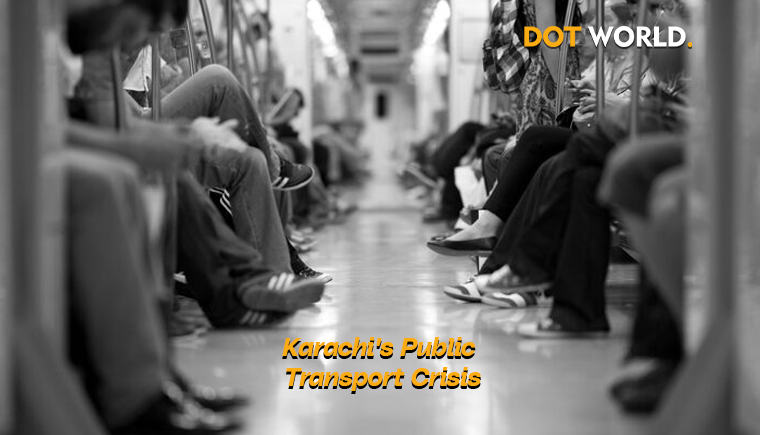
- Private minibuses became the main mode of public transport, but they are unsafe and overcrowded.
Today, public transport in Karachi is dominated by aging minibuses, rickshaws, and expensive app-based rides — none of which solve the larger mobility crisis.
3. The Role of Urban Planning (or the Lack of It)
One of the main reasons for this crisis is poor urban planning. Karachi has grown in an unplanned way:
- New housing schemes are built far from commercial hubs without proper public transport access.
- Roads are expanded without considering pedestrian safety or dedicated bus lanes.
- Encroachments and illegal parking worsen traffic congestion.
Without a clear city development plan, Karachi’s mobility challenges are only increasing.
4. Traffic – The Daily Nightmare
Karachi’s traffic problem is more than just an inconvenience — it’s an economic drain.
- According to some estimates, traffic jams cost the city billions of rupees annually in fuel and lost working hours.
- Poor road discipline, lack of lane management, and broken signals make traffic chaotic.
- Public buses often stop in the middle of the road to pick up passengers, further blocking flow.
For a city aiming for rapid city development, this is a serious bottleneck.
5. The Impact on Karachi’s Residents
The public transport crisis affects every aspect of life in Karachi:
- Workers spend up to 3–4 hours commuting daily.
- Women face harassment and safety risks on overcrowded buses.
- Students struggle to reach schools and universities on time.
- The cost of commuting eats into household budgets.
When public transport fails, city development slows down because people simply can’t move efficiently.
6. Government Projects – Too Little, Too Late?
Several attempts have been made to fix Karachi’s public transport:
- Green Line BRT: A dedicated bus corridor with modern buses, but it covers only a small portion of the city.
- People’s Bus Service: A step forward, but limited in scale compared to the city’s needs.
- Karachi Circular Railway (KCR) revival: Still under construction, years behind schedule.
While these projects are promising, they are not enough to meet the demands of a rapidly growing Karachi.
7. Lessons from Other Cities
Cities like Istanbul, Jakarta, and Delhi have faced similar public transport challenges but improved through:
- Integrated bus and train systems.
- Dedicated lanes for buses to avoid traffic congestion.
- Smart urban planning that connects housing, jobs, and transport.
Karachi can learn from these models, but it requires political will and consistent investment in city development.
8. What Needs to Change
To solve Karachi’s public transport crisis:
- Integrated Transport Policy – Connect buses, trains, and ride-sharing apps into one ticketing system.
- Urban Planning Reforms – Plan housing and commercial areas around transport routes.
- Traffic Management – Enforce lane discipline and remove encroachments.
- Investment in City Development – Build more BRT lines, expand railway services, and upgrade roads.
Conclusion – A City Stuck in Neutral
Karachi is Pakistan’s economic engine, but without an efficient public transport system, it cannot reach its full potential. Poor urban planning, endless traffic, and slow city development have left millions stranded in daily frustration.
For Karachi to move forward, transport must be treated as a priority — not just an afterthought. A modern, reliable public transport network is not a luxury; it’s a necessity for the city’s future.