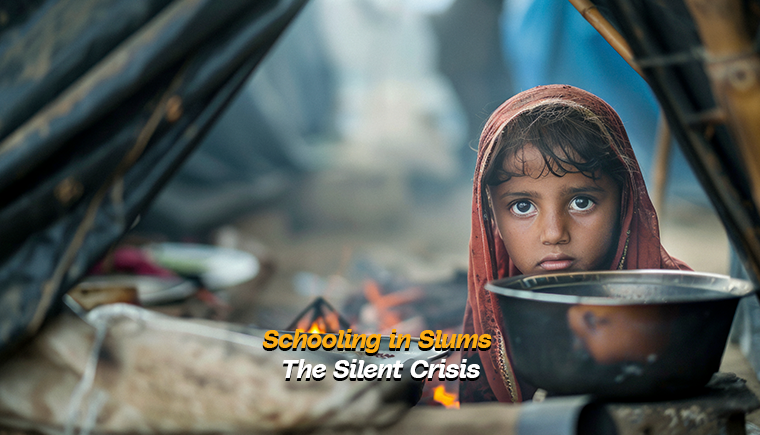
In the heart of Pakistan’s largest cities, behind the high-rise buildings and busy marketplaces, lies a hidden world — the slums. Here, narrow alleyways are crowded with makeshift homes, and the air is thick with the struggles of urban poverty.
Amid these challenges, there is one crisis that often goes unnoticed: primary schooling for children in these areas. While much of Pakistan’s education debate focuses on curriculum reforms or university rankings, the reality is that millions of children are being denied even the most basic form of education because they live in slums.
This blog dives deep into slum education, why it matters, and what can be done to break this cycle of inequality.
The Harsh Reality of Primary Schooling in Slums
Slum settlements in cities like Karachi, Lahore, and Islamabad are often overcrowded and under-resourced. Schools here — if they exist at all — are usually in cramped, unsafe buildings, lacking proper classrooms, books, and trained teachers.
For children growing up in urban poverty, primary schooling is often a privilege, not a right. Many families simply cannot afford school fees, uniforms, or even the time away from work that education requires.
The lack of investment in slum education perpetuates a vicious cycle: without basic literacy and numeracy skills, these children grow into adults with limited job prospects, keeping them trapped in poverty.
Why Slum Education Matters for Pakistan’s Future
Education is more than just learning how to read or write — it’s the foundation for social and economic mobility. For children in slums, primary schooling can be the gateway to escaping urban poverty.
In the context of Pakistan’s education system, ignoring slums means ignoring millions of potential innovators, leaders, and contributors to the economy. Without intervention, the country risks widening the gap between the privileged and the marginalized.
To learn more about education challenges in marginalized communities, visit our Education Blogs.
Key Challenges in Slum Education
1. Lack of Infrastructure
Many slum areas don’t have dedicated school buildings. Some “schools” operate in a single rented room or even outdoors. This affects the quality of primary schooling and discourages children from attending.
2. Shortage of Teachers
Due to poor pay and challenging working conditions, trained teachers are reluctant to work in slums. Those who do often lack proper training in managing slum education environments.
3. Financial Barriers
Even where schools exist, urban poverty makes it difficult for families to cover costs of uniforms, books, or transportation.
4. Social Stigma
Children from slums are often treated differently when they attend schools outside their community, further discouraging attendance.
Case Study: Slum Education in Karachi
Karachi is home to some of Pakistan’s largest slum areas, like Orangi Town and Machar Colony. Here, primary schooling is often provided by small, community-run initiatives or NGOs.
While these organizations make a huge difference, they can only cater to a fraction of the children in need. According to education surveys, nearly half of school-age children in Karachi’s slums are not enrolled in any form of Pakistan’s education system.
For related discussions, check our video on Education Inequality in Pakistan.
The Role of NGOs and Community Efforts
Several slum education projects are making an impact:
- Street Schools: Informal learning centers set up in community spaces.
- Mobile Schools: Converted buses that travel to slums to deliver primary schooling.
- NGO Partnerships: Groups like TCF (The Citizens Foundation) and local charities providing free education to children in urban poverty zones.
However, these efforts need more funding, volunteers, and government backing to scale up.
The Government’s Responsibility in Pakistan’s Education
While NGOs play an important role, the government must lead the way. Allocating a higher budget for primary schooling in marginalized areas is essential. This includes:
- Building safe and accessible schools in slums.
- Offering free books, uniforms, and meals.
- Training teachers specifically for slum education challenges.
- Integrating slum schools into the national curriculum of Pakistan’s education system.
Breaking the Cycle of Urban Poverty Through Education
Investing in primary schooling in slums doesn’t just help children — it transforms entire communities. Literate parents are more likely to send their children to school, creating a generational shift that can slowly dismantle urban poverty.
Education also reduces crime, improves health outcomes, and creates more engaged citizens. For slum residents, it can be the first step towards empowerment and equality.
How You Can Help
- Volunteer: Offer your time to teach or mentor children in slum areas.
- Donate: Support NGOs focused on slum education and primary schooling.
- Raise Awareness: Share facts and stories about urban poverty and its impact on Pakistan’s education system.
- Advocate for Policy Change: Push for more government attention towards marginalized communities.
You can collaborate with us for such initiatives via our Brand Collaboration Page.
Conclusion
The crisis of primary schooling in Pakistan’s slums is a silent one — hidden in the shadows of high-rise apartments and political debates. But its impact on Pakistan’s education system and society at large is profound.
If Pakistan is to truly progress, slum education must become a priority. By addressing urban poverty through education, we can create a future where every child, regardless of where they are born, has the opportunity to learn, grow, and succeed.